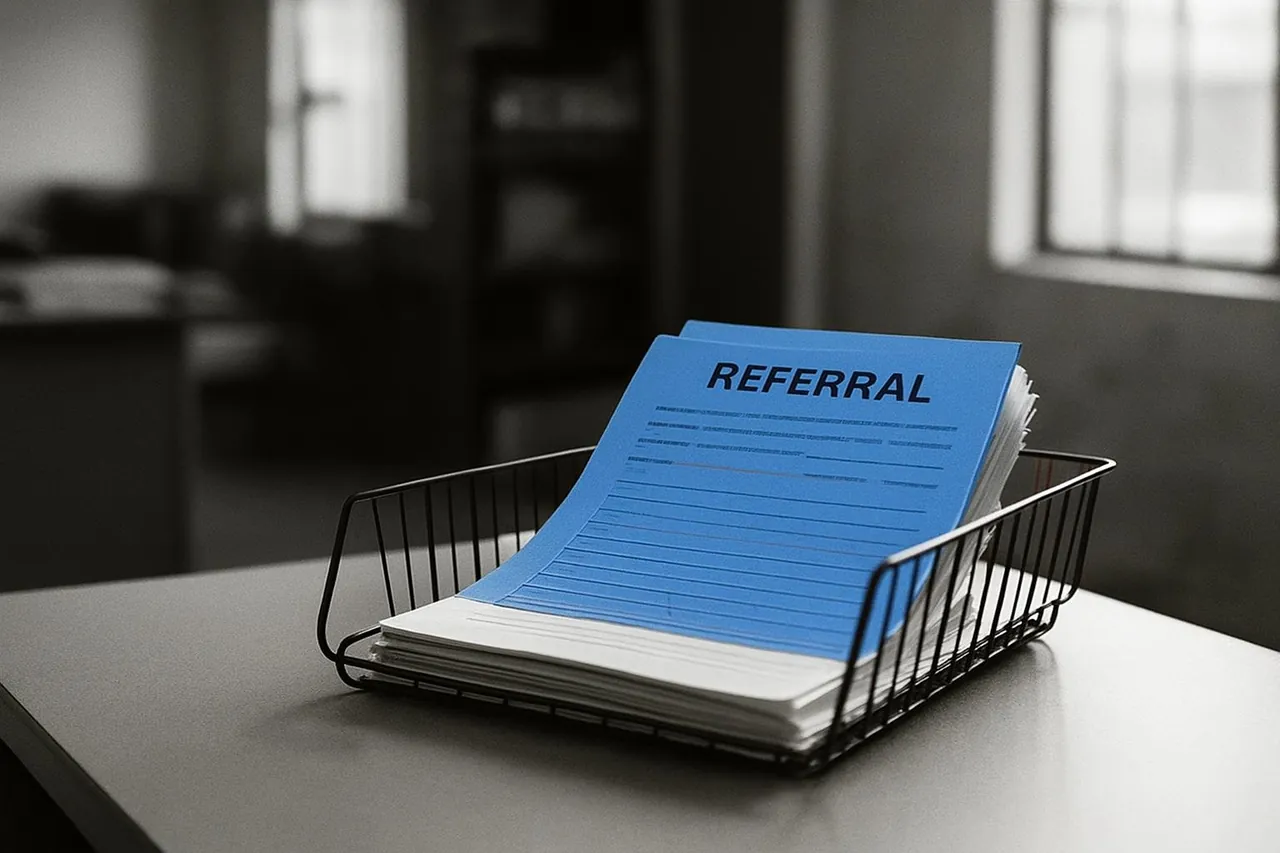
Referral forms that triage and route themselves
Inbound patient referrals automatically land in the right clinician's queue, with urgent cases flagged for immediate attention.
The problem
Today a receptionist or intake coordinator opens every referral, reads the clinical notes, decides which department or clinician should see it, and manually forwards it. Urgency is often missed in the rush, and a referral can sit in the wrong inbox for days. This hand-sorting is slow, inconsistent, and a single point of failure.
What AI makes possible now
When a referral arrives by email, portal, or fax, the automation reads the text and any attached documents. It extracts the patient's demographics, the reason for referral, and the referring provider's notes. The system then classifies the case into a predefined clinical queue and assigns an urgency flag based on keywords and phrases. Normal referrals are routed to the correct clinician's task list; urgent ones are pushed to the top with a notification so they are seen first.
How it works
- Incoming referrals land in a monitored email inbox or are uploaded to a secure portal.
- The AI reads the content, pulling out patient name, date of birth, reason for referral, and any red-flag terms.
- Based on your clinic's specialties, it assigns the case to the right queue (e.g., physiotherapy, psychology, podiatry) and sets an urgency level.
- Routine referrals are filed in the appropriate team member's task list; urgent referrals are highlighted and sent to the on-call clinician immediately.
The first thirty days
In the first 30 days, you forward referrals to a dedicated email address. The system replies with a structured summary that includes the extracted details, suggested queue, and an urgency flag. Your team reviews these summaries in a shared channel or spreadsheet while the final routing logic is refined.
How it earns
It removes the manual sorting step entirely, turning intake from a bottleneck into a background process. The primary value is faster time to treatment for patients who need it most, which improves outcomes and reduces the clinical risk of a delayed referral.
Why now
Referral volumes are climbing while admin teams stay lean. Modern language models can now handle the inconsistent formatting and shorthand typical of referral letters, making this automation viable where it wasn't a year ago.
First customers
Multi-disciplinary clinics, allied health networks, and community health centres that process more than 15 external referrals a day.
The hard part
The model can misread clinical nuance and may under-flag urgency if the referring GP uses indirect language. All high-urgency flags must be reviewed by a clinician within a short window, and a human should audit a sample of routine referrals to catch edge cases.
Build this with us
We connect to your existing referral intake channels, map your queues and urgency criteria, and deliver a system that runs quietly in the background. If your team spends hours sorting referrals, book a call and we'll show you how it works with a sample of your own forms.